

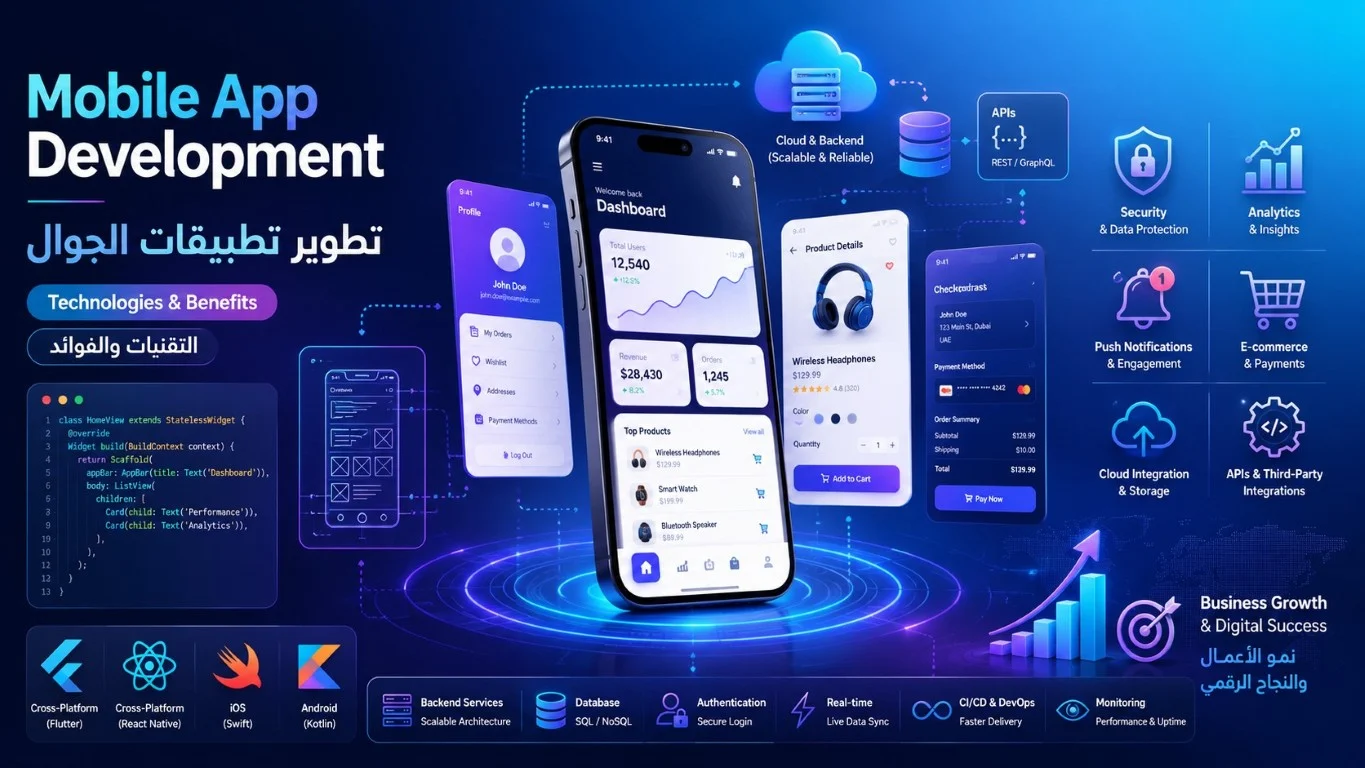
Mobile App Development: Building the Future of Digital Business
In today's digital world, mobile applications have become one of the most powerful tools for businesses to connect with customers, automate services, and increase revenue. Whether you're running a startup, an e-commerce store, a healthcare organization, or an educational platform, a professionally developed mobile app can significantly improve customer engagement and business growth.
As smartphone usage continues to grow worldwide, investing in mobile app development is no longer optional—it's a strategic business decision.
What is Mobile App Development?
Mobile app development is the process of designing, building, testing, and deploying software applications that run on smartphones and tablets. These applications can be developed for:
- Android devices
- iPhone (iOS)
- Cross-platform solutions that work on both Android and iOS
Modern mobile apps are designed to provide fast performance, intuitive user experiences, and seamless integration with cloud services and business systems.
Technologies Used in Mobile App Development
Choosing the right technology depends on project requirements, budget, timeline, and scalability.
1. Native Development
Native applications are built specifically for one operating system.
Android
- Kotlin
- Java
- Android Studio
iOS
- Swift
- Objective-C
- Xcode
Advantages
- Maximum performance
- Best user experience
- Full access to device features
- Better security
2. Cross-Platform Development
Cross-platform frameworks allow developers to build one application that runs on both Android and iOS.
Popular frameworks include:
- Flutter (Google)
- React Native (Meta)
- .NET MAUI
- Ionic
Advantages
- Faster development
- Lower development cost
- Single codebase
- Easier maintenance
3. Backend Technologies
Most modern mobile applications require a powerful backend.
Popular backend technologies include:
- Laravel (PHP)
- Node.js
- ASP.NET Core
- Django (Python)
- Spring Boot (Java)
Databases commonly used:
- MySQL
- PostgreSQL
- MongoDB
- Firebase Firestore
4. Cloud Services
Cloud platforms provide scalability, storage, and security.
Popular providers:
- Google Firebase
- Amazon Web Services (AWS)
- Microsoft Azure
- Google Cloud Platform
These services support:
- Authentication
- Push notifications
- File storage
- Analytics
- Real-time databases
Mobile App Development Process
Professional app development usually follows these stages:
Requirement Analysis
Understanding business goals and user needs.
UI/UX Design
Creating modern, user-friendly interfaces that improve customer experience.
Development
Building frontend and backend components.
Testing
Testing functionality, performance, security, and compatibility across devices.
Deployment
Publishing the application on:
- Google Play Store
- Apple App Store
Maintenance
Providing updates, bug fixes, security improvements, and new features.
Benefits of Developing a Mobile App
Improve Customer Experience
Customers can access products and services anytime with just a few taps.
Increase Sales
Mobile apps simplify purchasing, subscriptions, and online payments.
Build Customer Loyalty
Loyalty programs, rewards, and personalized experiences encourage repeat customers.
Strengthen Brand Identity
A professionally designed app enhances brand recognition and credibility.
Direct Communication
Push notifications allow businesses to instantly communicate promotions, updates, and important announcements.
Better Data Collection
Businesses gain valuable insights through user analytics and behavior tracking.
Competitive Advantage
Companies with mobile apps often outperform competitors who rely only on websites.
Popular Features in Modern Mobile Apps
Today's applications commonly include:
- User authentication
- Social login
- Online payments
- GPS and Maps
- Push notifications
- Live chat
- QR Code scanning
- Camera integration
- Offline mode
- Cloud synchronization
- AI-powered recommendations
- Dark mode
- Multi-language support
Why Businesses Need Mobile Apps
Businesses across industries benefit from mobile applications:
- E-commerce
- Healthcare
- Restaurants
- Logistics
- Education
- Banking
- Real Estate
- Tourism
- Manufacturing
- Corporate Services
A mobile app enables businesses to serve customers more efficiently while reducing operational costs and improving productivity.
The Future of Mobile App Development
Emerging technologies continue to transform mobile applications:
- Artificial Intelligence (AI)
- Machine Learning
- Augmented Reality (AR)
- Virtual Reality (VR)
- Internet of Things (IoT)
- Blockchain
- Voice Assistants
- Wearable Device Integration
These innovations will create smarter, faster, and more personalized user experiences.
Conclusion
Mobile app development has become an essential investment for organizations aiming to grow in the digital era. By using modern technologies such as Flutter, React Native, Kotlin, Swift, Laravel, Firebase, and cloud platforms, businesses can build secure, scalable, and high-performance applications that improve customer satisfaction and drive long-term success.